
 EN
 ES
 FR
 DE
 IT
 PT
 AR
 JA
Acrylic vs Glass: Which Is Better for Display Boxes
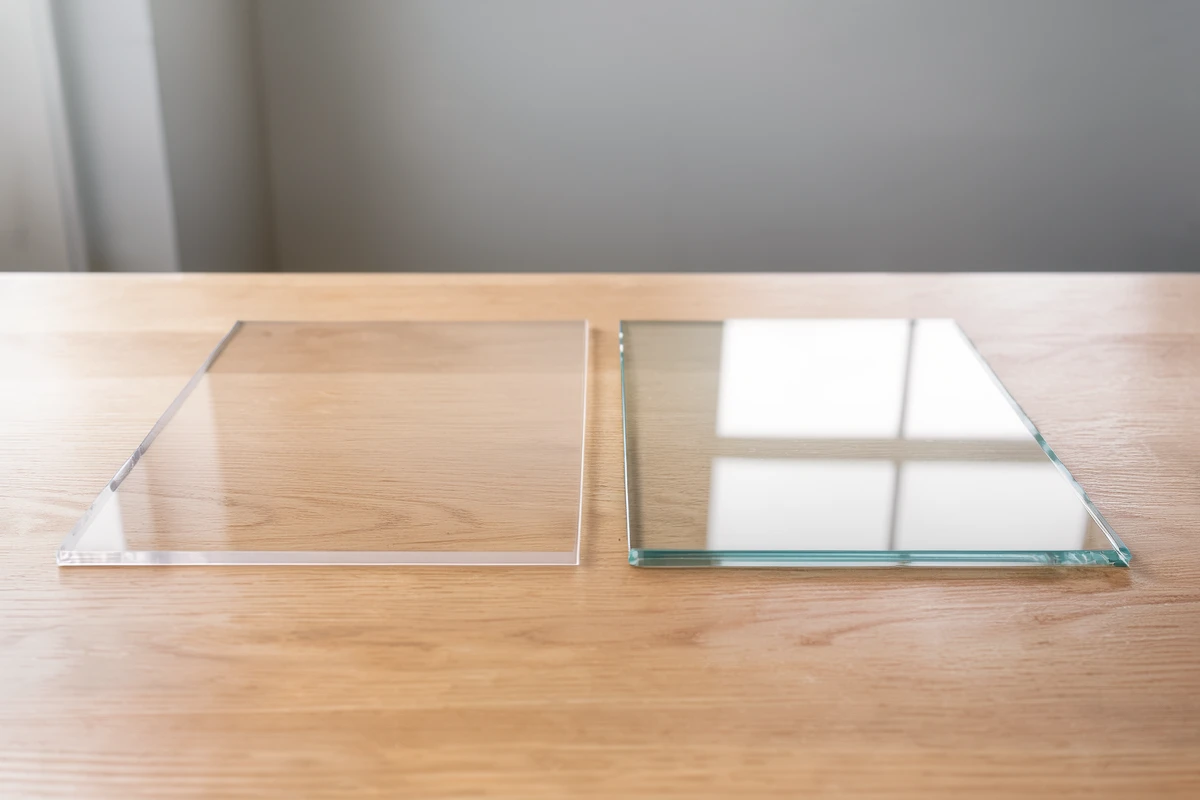
If you source display boxes, the question lands early: acrylic or glass? Both are transparent, both can look premium, and at a glance a finished box in either material does the same job behind a counter. The differences show up in weight, in what happens when something hits them, and in what it costs to move a box from the factory to a shop floor intact.
Acrylic wins most retail display applications. Glass still makes sense in a few specific ones, mainly permanent installations where nothing moves and the priority is a tight seal and a hard surface. The comparison below works through the dimensions that decide it.
Acrylic, Plexiglass, Perspex, Lucite: One Material
Search interest in this topic splits roughly in half between asking how the two materials compare and asking whether the names describe different things. They do not. Acrylic, PMMA, plexiglass, Perspex, and Lucite all name the same clear plastic, and the brand names come from the markets the material traveled through. “Acrylic glass” is a marketing term for that same sheet, not a blend of plastic and glass. When a supplier quotes you “acrylic glass”, you are being quoted acrylic.
Clarity: How Close to Glass Does It Look
Acrylic is optically close to glass. Its refractive index is 1.491 against 1.522 for glass, and it transmits slightly more light than glass does (Fabre-Francke et al., 2019). Measured on its own, a quality sheet passes about 92% of visible light (Fu et al., 2018). The practical difference is color. Standard float glass carries a faint green tint, which is why museum glazing guidance specifies low-iron glass where color accuracy matters (Museum of Western Australia). Acrylic has no such cast.
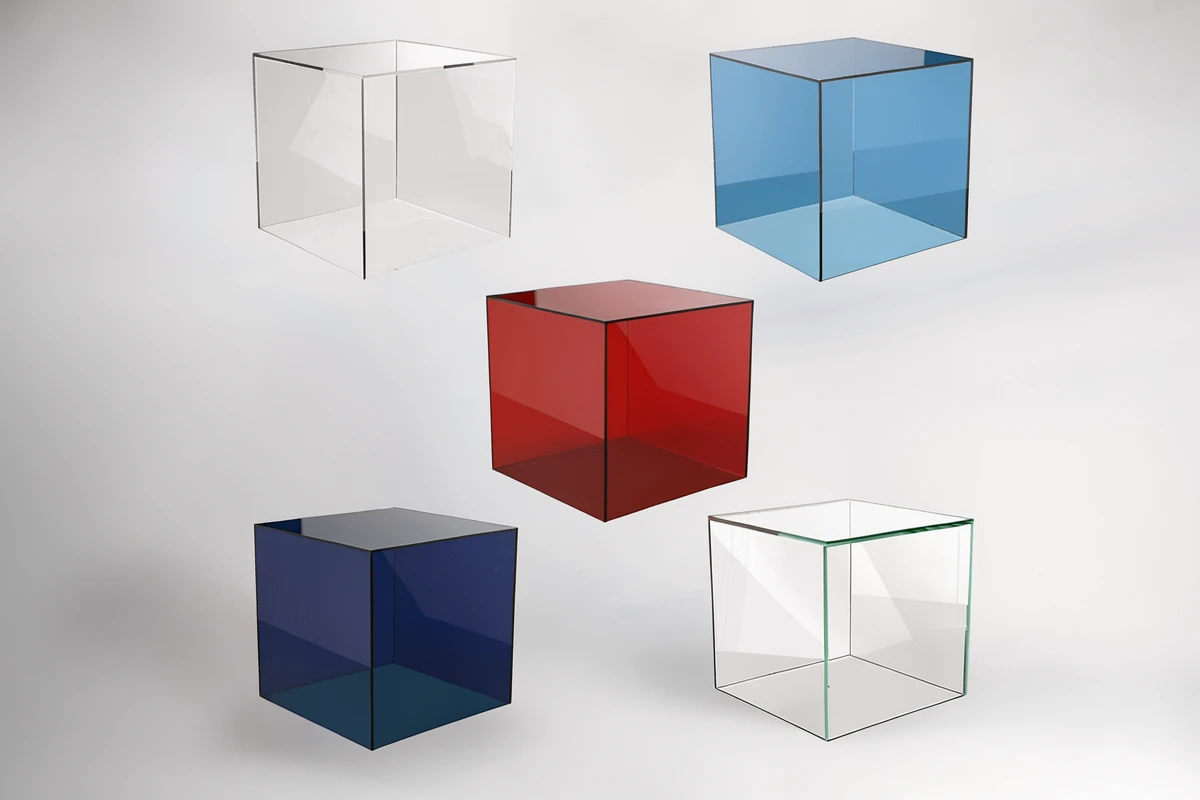
The other difference sits at the edge. Polished acrylic carries light along its edge the way a fiber does, which is what makes edge-lit acrylic signage and illuminated cases glow. Glass cannot do this. Under normal counter lighting, though, both materials read as clear, and the remaining difference is how they feel in the hand: acrylic is warm and noticeably lighter.
Weight: The Number That Decides Freight
PMMA has a density of about 1.19 g/cm³, against roughly 2.5 g/cm³ for glass, so a sheet of acrylic weighs about half what the same size and thickness of glass does (Fabre-Francke et al., 2019). Museum guidance on display cases reaches the same practical conclusion, describing glass as “heavy and expensive” next to acrylic, which it calls “cheaper, lighter” (Museum of Western Australia).
One box on a counter makes that a minor detail. It stops being minor when boxes are wall-mounted, shipped in volume, or carried between stores by staff. Weight drives freight, packing, and installation labor at the same time. A wall-mounted acrylic vitrine can hang on lighter fixings, and one person can move a floor display. Glass of any real thickness turns each of those into a two-person job with a breakage risk attached.
What Happens When It Gets Hit
This is where the two materials part company. Acrylic is less brittle than glass (Fabre-Francke et al., 2019), and museum display guidance puts it plainly: acrylic panels “do not break as easily as most glass” (Museum of Western Australia).
How each material fails matters as much as when. The same guidance warns against tempered glass in display cases, because it shatters into thousands of small fragments that would land on whatever sits inside. Acrylic cracks or breaks into larger pieces with less dangerous edges. On a shop floor, with products and customers close to the display, that difference is the whole argument: a knocked acrylic box may crack, while a knocked glass box puts shards on the merchandise and into the aisle.
Where Glass Still Wins
Acrylic takes most of the comparison, but glass keeps real advantages, and buyers should know them.
- Scratch resistance and cleaning. Acrylic has “poor resistance to scratching” (Fabre-Francke et al., 2019), and frequent cleaning dulls it over time: museum guidance notes acrylics’ “tendency to craze with constant cleaning” (Museum of Western Australia). Where a surface gets scrubbed hard and often, glass holds up better.
- Seal, size, and lifespan. Glass holds a better seal for enclosed cases, works at larger sizes, and takes hinges better. Museum guidance recommends glass for displays planned beyond about two years, and acrylic for shorter-term ones (Museum of Western Australia). A permanent flagship vitrine sits in glass’s column; a seasonal retail display does not.

Cost: Compare the Delivered Box, Not the Sheet
Museum guidance sums the cost side up directly: glass is “heavy and expensive”, acrylic “cheaper” (Museum of Western Australia). Part of that is the sheet price, and part is everything after it. Acrylic halves the freight weight, survives a carrier that glass does not, and needs less protective packing and fewer replacement shipments when something breaks in transit. A sheet price advantage for glass tends to disappear by the time a box reaches a shop floor and has to stay unbroken there.
The Comparison, Side by Side
| Acrylic (PMMA) | Glass | |
|---|---|---|
| Weight, same size and thickness | About half | Baseline |
| Density | About 1.19 g/cm³ | About 2.5 g/cm³ |
| Light transmission | About 92% | Slightly lower |
| Break behavior | Less brittle, cracks with less dangerous edges | Shatters into sharp fragments; tempered glass worst |
| Scratch resistance | Poor | Higher |
| Cleaning | Crazes with constant cleaning | Tolerates frequent cleaning |
| Seal and size | Suits smaller, handled cases | Better seal, larger cases, better hinges |
| Cost | Cheaper, lighter to ship | Heavier and more expensive |
| Best used for | Retail displays, travelling showcases, signage | Permanent vitrines, large cases, long-term installations |
Which One for Your Display Box
Run the box through the use case rather than the spec sheet. A countertop vitrine, a wall-mounted display, or anything that ships or gets handled regularly points to acrylic: lighter, safer when knocked, cheaper to move, and easier to fabricate into the shapes a display needs. A permanent, large vitrine in a fixed location, where nothing moves and the surface takes constant cleaning, points to glass.
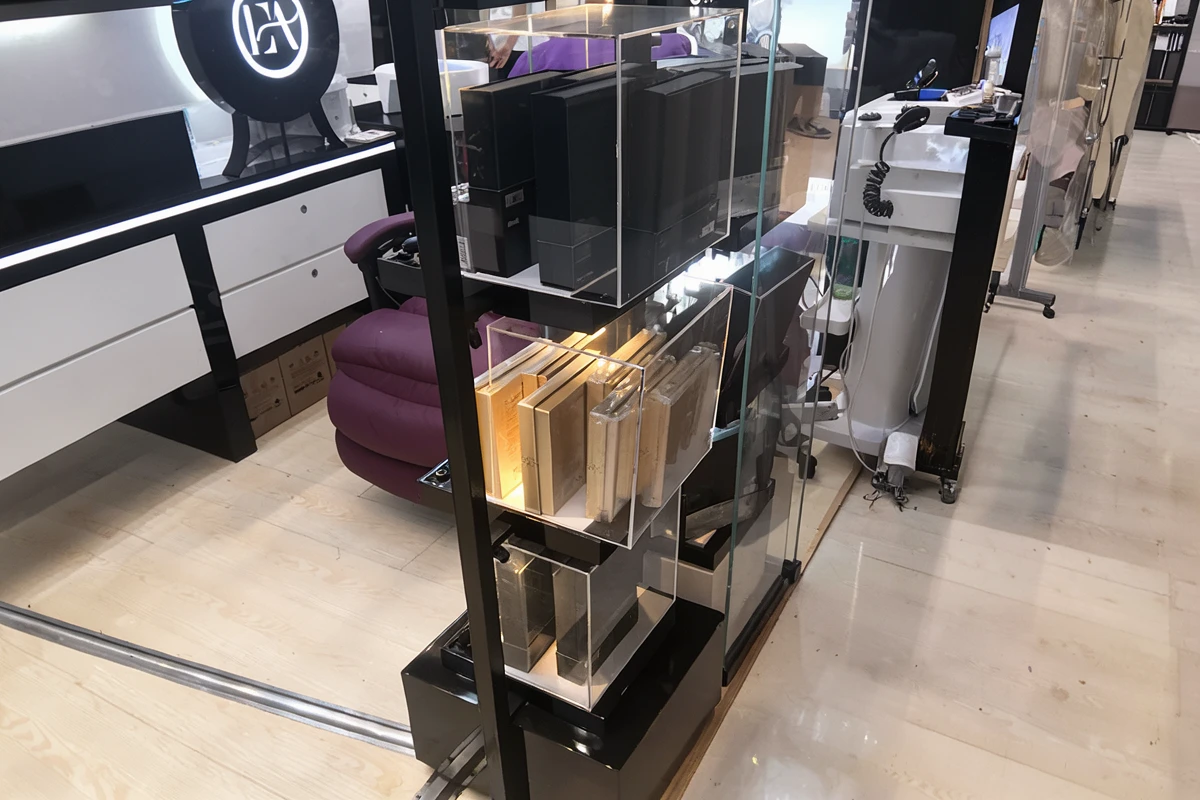
For retail brands, chain stores, and distributors, acrylic covers almost every display case in the catalog. SOONXIN produces acrylic display cases and boxes covering countertop, stackable, wall-mounted, and freestanding formats, with printing and laser engraving finished in house. Tell us what the box has to hold, how it gets handled, and where it ships, and we will confirm the material and thickness that fit.
References
Fabre-Francke, I., Berrebi, M., Lavédrine, B., & Fichet, O. (2019). Hybrid PMMA combined with polycarbonate inside interpenetrating polymer network architecture for development of new anti-scratch glass. Materials Today Communications, 21, 100582.
Fu, X., Zhang, G., Zhang, J., Guo, K., & Pan, Y. (2018). Improvement of aluminium film adhesion on PMMA using pre-layer and specific annealing. Coatings, 8(5), 186.
Museum of Western Australia. Display. Conservation and Care of Collections manual.